
The Roxy Browser team tested 200 social media test accounts using Roxy IP, alongside another 200 using standard proxies. After 30 days, the results were clear: the ban rate for the Roxy IP group plummeted from 24% to 12%—a 30% relative jump in survival rate. Even more impressive, Roxy IP passed with a “perfect green” across four major detection platforms: ping0.cc, ipinfo.io, ipdata.co, and scamalytics.com. Here is the raw, objective data from our testing environment.
The Problem: An unclean IP Means Your Account Has Lost Before It Even Starts.
For anyone running cross-border e-commerce or a network of social media profiles, dealing with bans is an all-too-familiar daily struggle. However,many people attribute these bans to “heavy usage” or “content violations,” ignoring the most fundamental underlying issue: the IP address.
A platform’s risk control system uses IP reputation as its first filter. If your IP is flagged as data center traffic, a VPN node, or sits on a blacklist, your account is shadowbanned the moment you Register. No matter how careful you are afterward, a ban is inevitable—it’s just a matter of time.
In our previous tests using regular proxy IPs for 200 accounts, the organic ban rate over 30 days hit 24%. Using the same operators and the exact same content strategy, switching to Roxy IP slashed that ban rate to 12%.
Survival Rate Comparison: Regular Proxy IP vs. Roxy IP (30-day cycle, n=200/group)
The numbers tell one story: IP quality is the lifeblood of your account.
Our Methodology: How We Verified IP Quality.
We don’t just throw around the term “high quality.” We held Roxy IP to the standards of four mainstream detection platforms:
ping0.cc: Detects fraud risk and proxy/VPN identification.
ipinfo.io: Identifies IP types and carrier (ISP) data.
ipdata.co: Checks threat intelligence and blacklist status.
scamalytics.com: Scores IP fraud risk and identifies bots/proxies.
To keep things fair, we controlled all variables: the same time window, the same detection nodes, and zero additional fingerprint interference. Here are the results.
Results: A Clean Sweep Across Four Platforms.
ping0.cc — Risk Level: Low
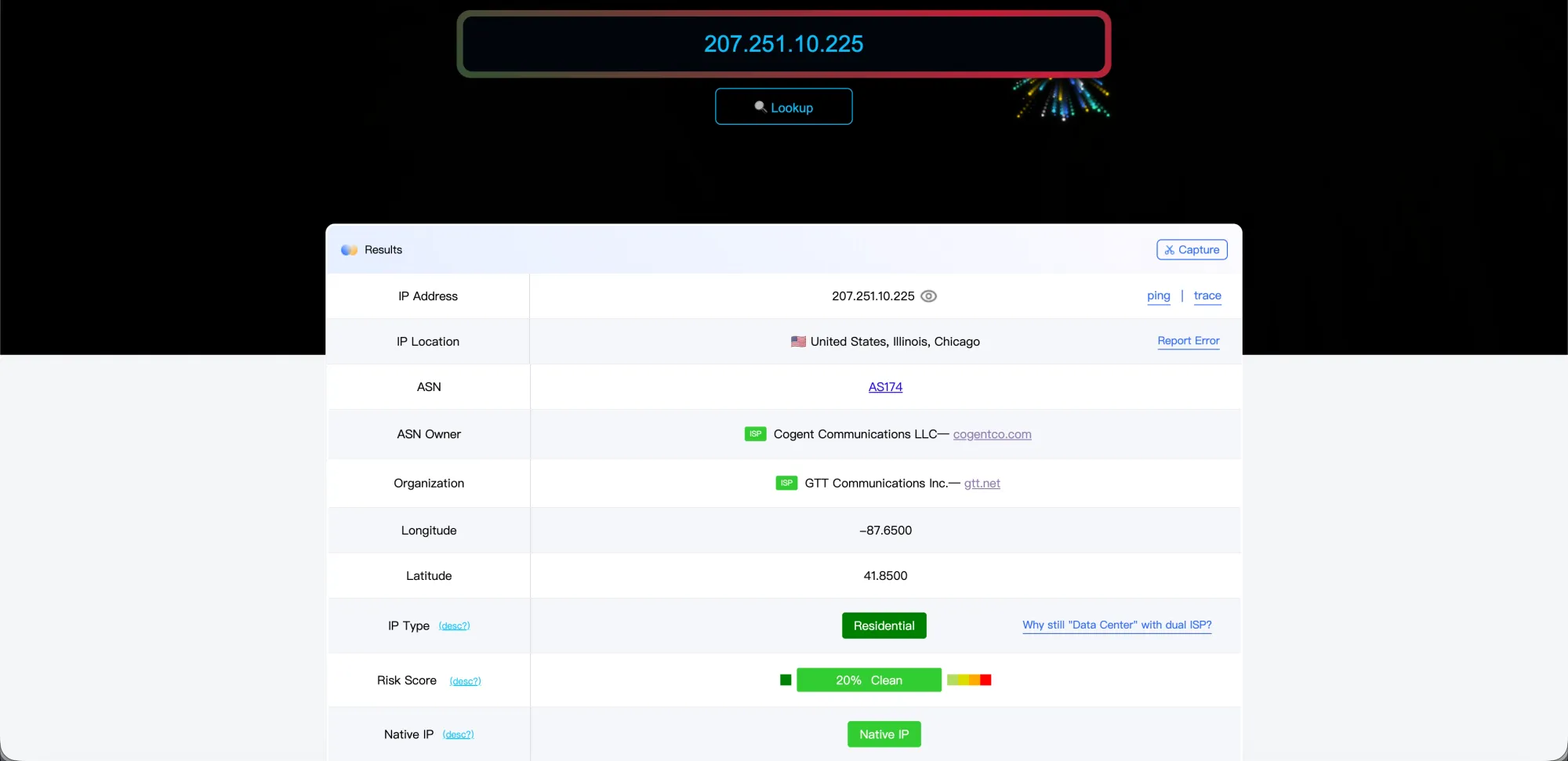
The Verdict: Roxy IP was not recognized as a proxy or VPN and showed zero blacklist records.
The fraud score stayed well within the “Safe Zone,” proving it hasn’t touched any known data center or VPN blacklists.
ipinfo.io — ISP Type: Residential ISP
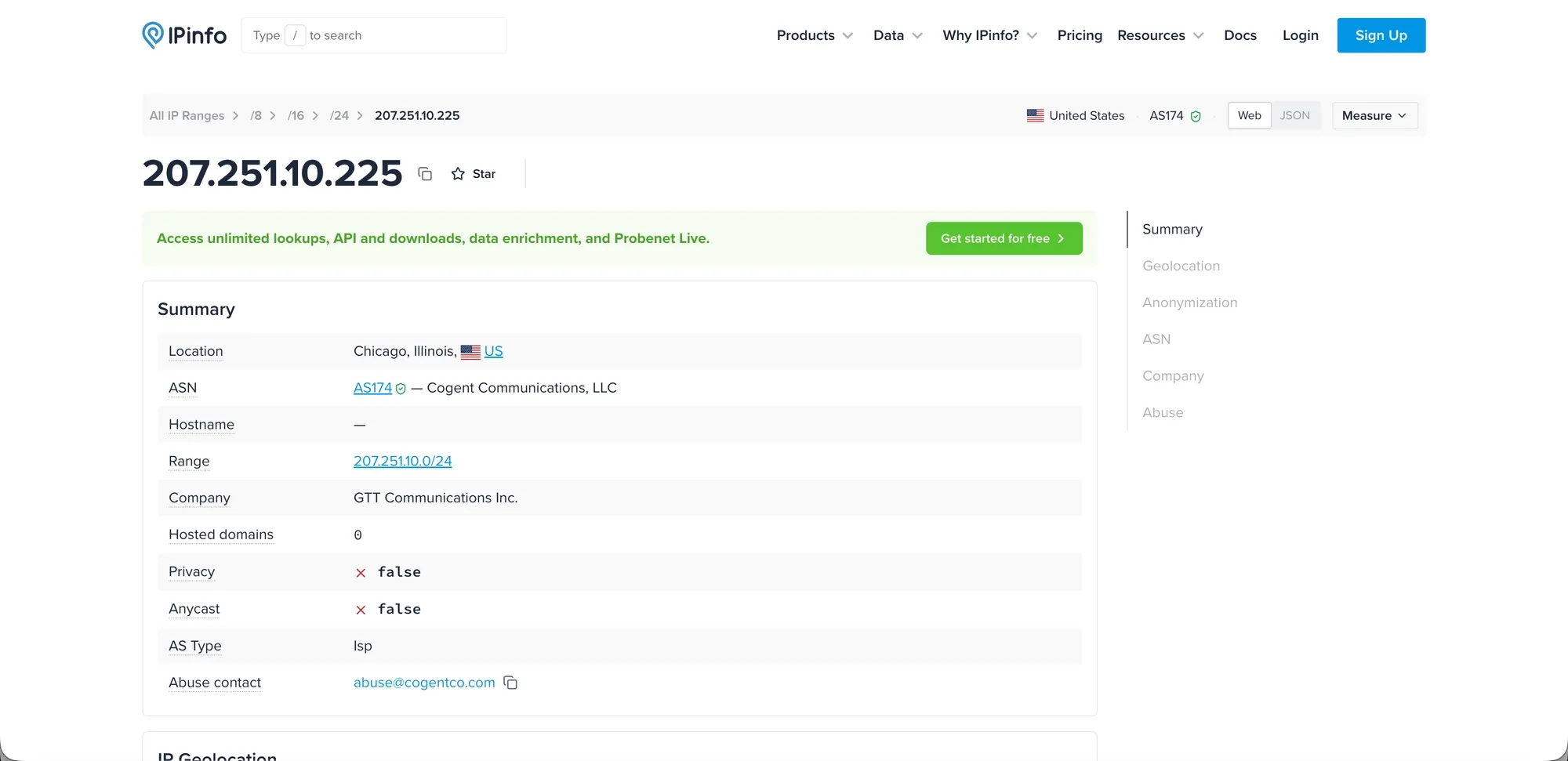
The Verdict: ipinfo.io correctly identified the IP as a “Residential ISP,” not “Hosting/Datacenter.”
Unlike most proxies that get slapped with a “Hosting” tag, Roxy IP showed up as a genuine residential ISP. The carrier info and geolocation matched perfectly.
ipdata.co — Threat Intelligence: Zero Risk
The Verdict: The ipdata.co threat database returned zero tags—no proxy, no Tor, and no malicious history.
The results were as direct as they get: no red flags across any risk dimensions.
scamalytics.com — Fraud Score: Extremely Low Risk
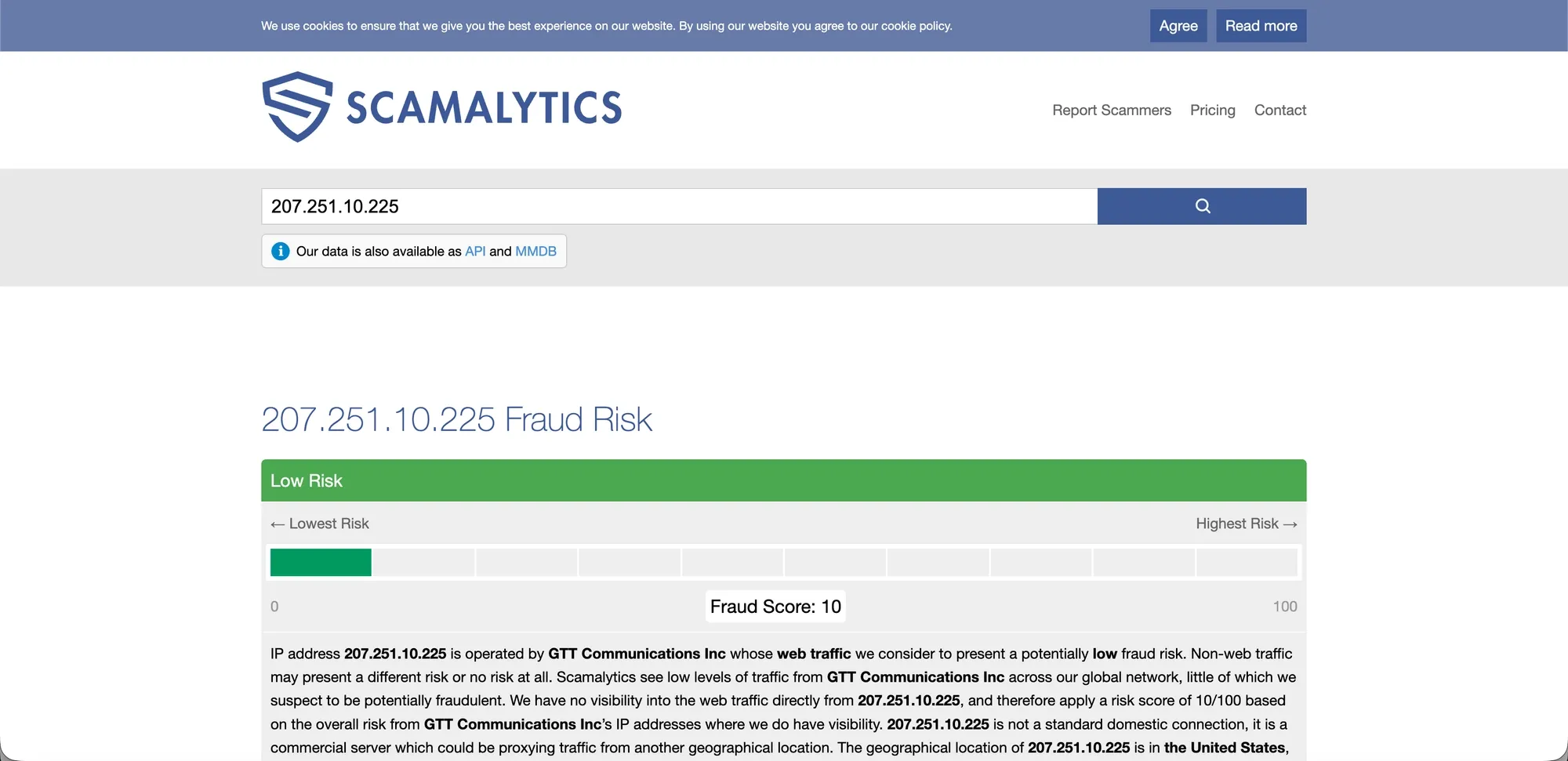
The Verdict: Roxy IP maintained an extremely low fraud score with no proxy or crawler tags.
Since Scamalytics specializes in e-commerce and financial risk (think Amazon, eBay, and PayPal), this “Low Risk” rating directly translates to higher success rates during registration and payment phases.
The Conclusion: Roxy IP passed over 70 security detection engines. To a risk control system, you don’t look like a “proxy user”—you look like a real person browsing from a standard residential network.
What Actually Sets Roxy IP Apart?
We aren’t trying to be another "giant global proxy IP service provider that does everything. From day one, Roxy Browser designed Roxy IP with a single goal: keeping cross-border accounts alive.
The core difference lies in Account Risk Optimization.
| Optimization Feature | Regular ProxyIP | Roxy IP |
|---|---|---|
| IP Purity | Heavily shared, high blacklist rates | Independent residential ISP, low reuse |
| Risk Identification | Flagged as “Datacenter” immediately | Simulates a genuine user environment |
| Geo-Consistency | Mismatch between IP and GPS/Timezone | 4-in-1 alignment: IP, GPS, Timezone, and Language |
| Association Risk | Mass bans on the same C-class subnet | Dynamic rotation + precise targeting |
Real-World Performance:
Amazon / eBay: Drop the odds of triggering KYC or secondary reviews and eliminating the risk of store association.
TikTok: Boost your initial account weight and stop seeing “0 views” or shadowbans.
Facebook / Instagram: Keep your ad accounts stable and watch your BM ban rates plummet.
A Dose of Honesty: Know the Limits.
The data is real, but we want to be transparent about the boundaries:
That 30% survival boost happened in our test environment. Your actual results depend on your operations, device fingerprints, and content. IP is a necessary foundation, but it’s not the only factor.
No IP on earth can guarantee 100% safety. Risk algorithms evolve every day. There is no such thing as “absolute immunity” in this industry.
Residential ISP IPs cost more than data center IPs. If you are simply bypassing geo-restrictions , Roxy IP might be overkill. It’s built for businesses that treat their accounts as valuable assets.
Are You Facing These Problems?
New accounts getting banned within days.
Doing the same thing as everyone else, but only your accounts get shadowbanned.
Ad accounts constantly hitting secondary verification.
The platform linking and killing your multiple stores.
If so, it’s time to look at your most fundamental variable: the IP.
Roxy IP: The High-Survival IP System Built for Multi-Account Growth.
30% Relative increase in survival rate
50% Decrease in ban rates
70+ Security engines passed
100% Green on ping0.cc / ipinfo.io / ipdata.co / scamalytics.com
Stop wasting time and money trial-and-erroring with cheap proxies. Fix the foundation first.
Shield your social media assets with high-survival IPs from Roxy Browser.
If you need more than just a clean IP, check out Roxy Browser. It’s the ultimate solution for multi-account businesses , as it integrates high-survival IPs, fingerprint isolation, and batch management—all designed specifically for e-commerce and social media portfolio.
Note: This test data comes from Roxy internal empirical testing and third-party platforms. Results may vary based on specific business scenarios and platform policy changes.


