Frequently Asked Questions
What are the core components of modern digital marketing solutions?
Modern solutions encompass SEO, PPC advertising, social media marketing, email automation, and content creation. Organizations utilize these strategies to drive targeted online traffic and convert audiences into measurable growth. A robust digital strategy integrates these channels to maximize return on investment. For example, Search Engine Optimization (SEO) builds long-term organic visibility, while Pay-Per-Click (PPC) provides immediate traffic ignition. To successfully scale these operations across different regions and client portfolios, marketers rely on advanced infrastructure, including Customer Relationship Management (CRM) tools and dedicated analytics platforms to monitor conversion funnels accurately.
Why do my PPC advertising accounts keep getting banned when scaling campaigns?
Suspensions usually occur due to shared browser fingerprints or overlapping IP addresses across multiple ad accounts. Advertising platforms like Google Ads and Meta Ads utilize strict tracking algorithms to prevent policy abuse. If an operator manages several client accounts from a single standard web browser, the platform detects matching hardware parameters (such as Canvas or WebGL) and flags the activity as suspicious. To safely scale campaigns, agencies must implement strict session isolation.
How can I manage multiple social media profiles safely for different clients?
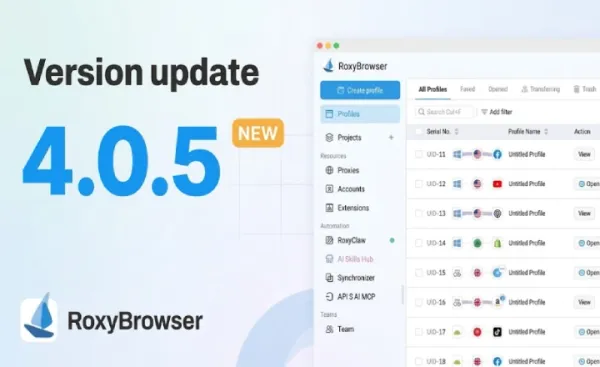
Marketers must use secure browser environments that assign distinct digital identities to each social media profile. Managing dozens of accounts on platforms like Facebook, TikTok, or LinkedIn from a single device risks triggering unusual activity algorithms. Social networks actively track cookies, local storage, and hardware signatures to prevent bot networks and spam. By deploying specialized software like RoxyBrowser, marketing teams can create individual, fingerprinted environments for every client. This infrastructure ensures that logging into one client's Instagram account does not accidentally expose cookies from another client's session, thereby eliminating the risk of cross-tracking and automated regional bans.
Does browsing from a single location skew international market research data?
Yes, utilizing a localized IP address forces search engines and websites to display geo-specific content, skewing competitive analysis. When digital marketers evaluate international competitors or test global SEO strategies, relying on their native network connection yields inaccurate results. Search engine results pages (SERPs) and dynamic pricing models adapt based on the user's physical location. To gather authentic data, researchers must simulate browsing behavior from the target region. This is achieved by combining targeted IP proxies with isolated browser profiles, allowing agencies to verify localized ad placements, monitor regional compliance, and accurately reverse-engineer competitor campaigns.
How to share access to marketing accounts securely with remote team members?
Teams must utilize secure account-sharing platforms that transfer active sessions without exposing the actual login credentials. Traditional methods of sharing passwords via messaging apps pose significant security risks and frequently trigger two-factor authentication (2FA) lockouts due to shifting IP addresses. Enterprise marketing teams solve this by centralizing access through an antidetect browser. Administrators can configure a secure profile containing the necessary cookies, proxies, and digital fingerprints, and then grant access to specific remote workers. This method ensures seamless global collaboration while maintaining strict data integrity and keeping the core digital marketing infrastructure highly secure.
Can I automate repetitive digital marketing tasks without triggering anti-bot systems?
Yes, users can execute automation safely by integrating AI-driven workflows within hardware-spoofed browser profiles. Standard automation scripts, such as legacy web scrapers or basic macro recorders, are easily detected by modern CAPTCHA systems and platform firewalls. However, advanced digital marketing operations now leverage AI integration, such as connecting ChatGPT with secure browsing environments. By executing these automated workflows within an isolated session that possesses a highly trusted, organic digital fingerprint and a clean residential IP, marketers can perform mass data extraction, automated social posting, and systematic lead generation without triggering platform security limits.